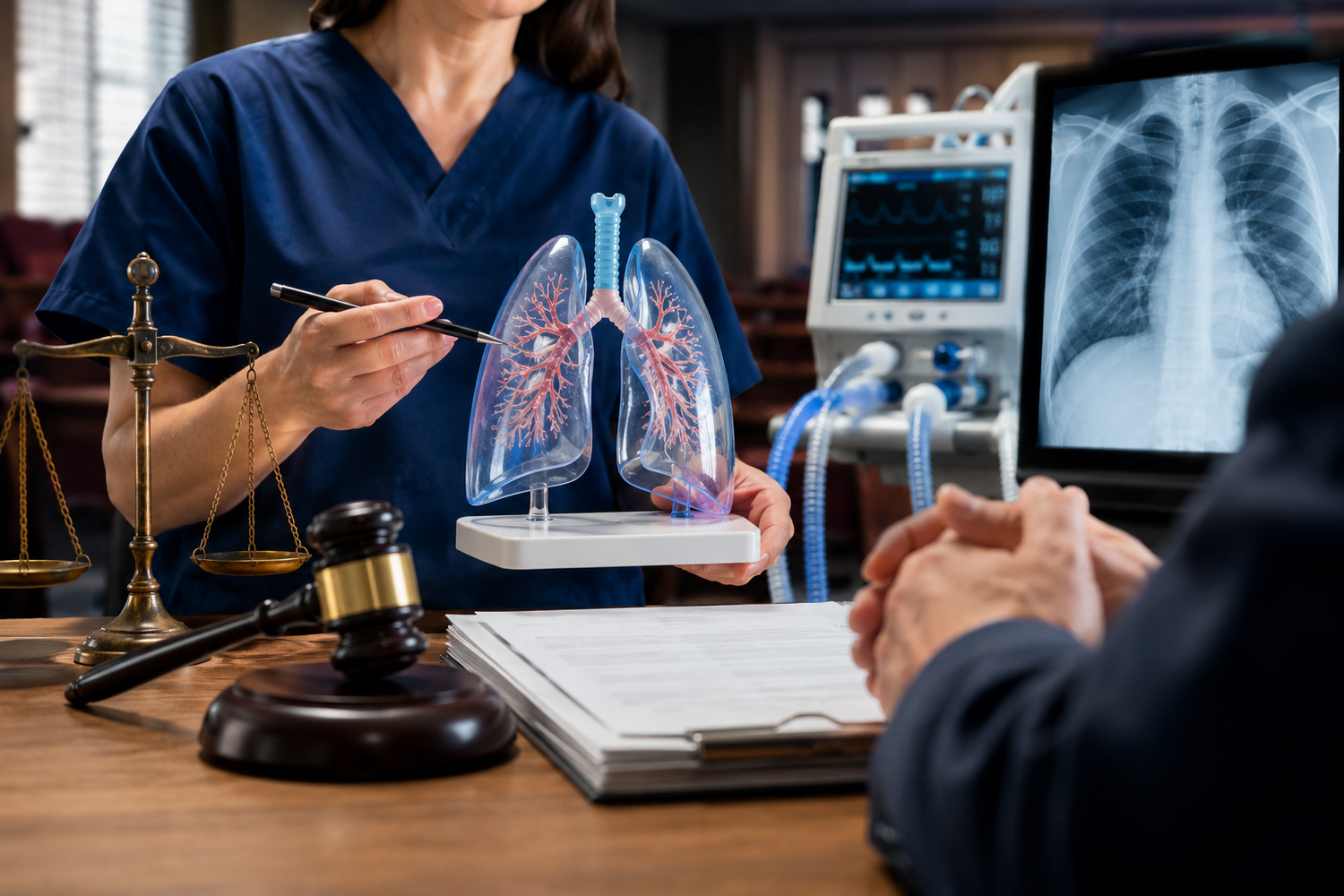
Georgetown Medical malpractice claims are usually challenging case of complex questions involving diagnosis, treatment, patient care in certain situations as well as the standard of care and whether a physician acted appropriately under the circumstances. Attorneys, except for those that have been to med school, cannot interpret the medically-related aspect of a case.
This is where a Medical Expert Witness comes in handy.
A medical expert can review charts, explain intricate clinical issues, assess the treatment provided and provide an independent professional opinion if required. Attorneys consult with experts that may be specialists with experience, such as a Pulmonologist Expert Witness (or other pathologies like Pathology Expert Witness), Urology Expert Witness, Critical Care Expert Witness or even Hospital Administration Expert Witness.
What Is a Medical Expert Witness?
Formula of the experts for a Medical Resister - The first writing, which will unlock all the practical and theoretical knowledge that each healthcare worker strives to receive. The purpose an expert witness serves, after all, is to shed light on medical problems that attorneys as well as judges or jurors may find perplexing.
For example, in a medical malpractice case, the expert may be asked to review whether the care provided was in accordance with the applicable professional standards of care and/or if a specific injury was extra or particularly outlined could have occurred from an alleged occurrence.
The expert's role is not just to endorse one side of a conflict. The opinion of a credible expert shall be objective, based on available evidence, professional knowledge, and applicable standards.
Why Attorneys Need Medical Experts in Malpractice Cases
This most typically involves hundreds of pages of medical records, diagnostic reports, medication histories, procedure notes, laboratory results, and other clinical documentation in a medical malpractice litigation.
An attorney may see how the law applies, but still needs help interpreting the medical evidence.
This is where a Medical Legal Expert comes in, translating complex medical jargon into simple, digestible explanations for everyone to understand.
For example, an expert may help an attorney understand:
- Whether a diagnosis was reasonably supported by the information available at the time
- Whether appropriate testing or treatment was considered
- Whether a procedure was performed according to accepted medical practices
- Whether an injury could have been caused by the alleged negligence
- Whether a patient's condition may have resulted from an underlying disease rather than the alleged error
- How a particular medical condition typically progresses
- Whether the medical records support the allegations made in the lawsuit
This type of analysis can help attorneys make informed decisions as a case develops.
How Medical Expert Witness Services Can Help
Professional Medical Expert Witness Services may cover several stages of litigation rather than being limited to courtroom testimony.
1. Initial Case Review
Before committing to the expenditure of significant sums in legal fees, a lawyer may seek an experienced physician to review the available records.
The expert may identify key medical issues, recognize omissions in the information available 4 and offer a preliminary assessment of the facts from a clinical viewpoint.
This can help attorneys determine which aspects of the case require additional investigation.
2. Medical Record Review
Medical records are often central to malpractice litigation.
A medical expert can systematically review records such as:
- Physician notes
- Nursing documentation
- Laboratory reports
- Imaging studies
- Medication records
- Surgical reports
- Emergency department records
- Discharge summaries
- Rehabilitation records
The expert can organize the medical information into a timeline and identify issues that may require closer legal or medical examination.
3. Standard-of-Care Analysis
One of the important questions in many malpractice cases is whether the healthcare provider's conduct was consistent with the applicable standard of care.
A qualified expert with relevant experience can evaluate the circumstances and explain the medical considerations involved.
The exact legal requirements for expert testimony and medical malpractice claims vary by jurisdiction, so attorneys should apply the rules applicable to their particular case.
4. Causation Analysis
Identifying an alleged mistake is not necessarily the same as establishing that the mistake caused an injury.
A medical expert can analyze the patient's medical history and explain potential relationships between the alleged conduct and the claimed outcome.
For instance, an expert may consider whether an injury could have resulted from:
- An underlying medical condition
- A natural progression of disease
- A pre-existing condition
- A complication associated with treatment
- A delay in diagnosis
- An alleged medication error
- A surgical complication
This analysis can be particularly important when causation is disputed.
5. Expert Reports and Litigation Support
Depending on the jurisdiction and the expert's role, attorneys may need written opinions or reports addressing specific medical issues.
Medical experts can also assist attorneys in understanding the technical basis of an opinion and preparing for questions that may arise during litigation.
6. Deposition Preparation
Since lawyers will often ask detailed questions about clinical decisions and medical literature a medical deposition can be psychologically exhausting for physicians who may be scrutinized about qualifications, prior testimony or how an opinion is formed.
A knowledgeable medical expert can assist an attorney in comprehending the medical matters at play so that counsel can prepare accordingly.
7. Trial Testimony
When a case proceeds to trial, a medical expert may explain complicated medical concepts in language that a judge or jury can understand.
Effective testimony generally requires more than medical knowledge. The expert should be able to explain the reasoning behind an opinion clearly and distinguish facts in the record from professional interpretation.
Choosing the Right Medical Expert
Finding the right expert involves more than selecting someone with a medical degree.
Attorneys should consider whether the expert's specialty and professional experience actually match the medical questions presented by the case.
Important considerations may include:
- Relevant clinical experience
- Specialty and subspecialty training
- Board certification where applicable
- Experience with the medical condition or procedure involved
- Familiarity with medical literature
- Prior consulting or testimony experience
- Ability to communicate complicated medical concepts clearly
- Professional reputation and credibility
- Willingness to provide an independent opinion
A strong match between the expert's background and the issues in dispute can make the medical analysis more relevant and understandable.
Different Types of Medical Experts for Different Cases
Medical malpractice cases can be in some entirely different areas of medicine. Attorneys should choose an expert with experience that corresponds to the issues at hand.
Pulmonologist Expert Witness
A Pulmonologist Expert Witness helps with cases such as: pulmonary disorders, respiratory diseases, breathing difficulties, lung damage or injury, artificial ventilation management & medical malpractice in those who work with Pneumonia, Asthma/ COPD, and further Pulmonary malignancies.
Pathology Expert Witness
Your Pathology Expert Witness can help with issues related to tissue samples, laboratory results, biopsy interpretation, diagnostic pathology, or cancer diagnosis.
Urology Expert Witness
A Urology Expert Witness can provide expertise in connection with urinary tract diseases, kidney disease, prostate treatment, urological procedures/surgical complications, and the failure to diagnose or treat a condition.
Critical Care Expert Witness
The services of a Critical Care Expert Witness will be most useful to you when your case involves: intensive care, sepsis, respiratory failure, organ failure, emergency interventions, monitoring or treatment of critically ill patients.
Hospital Administration Expert Witness
Not every healthcare-related legal dispute centers solely on a physician's clinical decision.
Depending on the particular case, a Hospital Administration Expert Witness may be able to enlighten the jury regarding hospital policies, staffing and administrative procedures, patient safety systems, credentialing, operational practices and other organizational matters.
The Difference Between Medical Experts and Legal Experts
A medical professional provides medical knowledge; an attorney provides legal analysis.
Always situated at the convergence of these domains, a Medical Legal Expert serves as an interpreter between legal teams and medical professionals, helping interpret medical records for cases. The expert should still stay in his lane and not opine about legal conclusions, which are the role of legal experts.
This distinction matters because in medicolegal cases, medical testimony needs to draw on what the doctor actually knows from clinical practice, not just speculation about legal outcomes.
Questions Attorneys Should Ask Before Hiring an Expert
Before engaging a medical expert, attorneys may want to ask:
- Does the expert have experience directly related to the medical issue in the case?
- Does the expert currently practice or have substantial experience in the relevant specialty?
- Can the expert explain complicated medical information clearly?
- Has the expert previously participated in depositions or trials?
- Is the expert available within the case's deadlines?
- What records will the expert need to conduct a meaningful review?
- What are the expert's fees and billing terms?
- Is the expert prepared to provide an independent opinion, even if that opinion does not support the anticipated position?
These questions can help attorneys evaluate whether a potential expert is appropriate for the specific matter.
Why Objectivity Matters
An expert witness is most useful when their analysis is grounded in evidence and professional expertise.
Attorneys should not be in search of an expert who finds their plaintiff-favorable theory more plausible. Rather, they want trained professionals who will review medical evidence thoughtfully and give their honest assessment.
It refers to challenges in research that can be identified through objective analysis, including strengths and weaknesses of the study design, questions left unaddressed by the current literature, or areas for which additional evidence may be needed
How Expert Witness Services Fit Into a Malpractice Case
The role of Expert Witness Services can begin before a lawsuit is filed and continue throughout litigation.
A typical process may look like this:
Case Screening → Medical Record Review → Expert Selection → Medical Analysis → Report/Opinion → Deposition Preparation → Deposition → Trial Preparation → Testimony
The exact process depends on the case, jurisdiction, procedural requirements, and the expert's role.
Working with an expert early can also help attorneys understand the medical issues before developing a litigation strategy.
Final Thoughts
Medical malpractice cases involve both legal and medical questions that attorneys must deal with. An experienced Medical Expert Witness can assist attorneys with interpreting complicated medical evidence, consulting on clinical issues as they arise in litigation, interpreting causation questions, and transmitting specialized information efficiently.
The case will be in need of a Pulmonologist Expert Witness but may not need a Pathology Expert Witness, Urology Expert Witness, Critical Care Expert Witness, or Hospital Administration Expert Witness, and the biggest part is whether or not that professional's expertise really answers the questions posed by the case.
Effective Medical Expert Witness Services will allow attorneys to attack complex medical evidence with a more defined focus on the clinical issues involved, which can assist in preserving appropriate separation between legal analysis and medical expertise.
Frequently Asked Questions
Q: What does a Medical Expert Witness do?
A Medical Expert Witness provides specialized medical knowledge that is relevant to a legal case. The expert who reviews the medical records, assesses clinical decisions, explains medical conditions and causation, prepares opinions, and provides deposition/trial testimony may do so depending on the assignment.
Q: When should an attorney hire a medical expert?
In particular, consider consulting a medical expert early in a potential malpractice case if the medical records or clinical issues are complex. Providing early review may help identify important medical questions prior to the expenditure of significant resources on litigation.
Q: What should the qualifications for a medical expert be?
Qualifications are case-dependent; however, attorneys typically look to: the expert's education and clinical experience; specialty training; board certification (if applicable); relevant case experience; communication skills; and familiarity with the medical issues involved.
Q: Can a medical expert review medical records?
Yes. Reviewing medical records is a common part of medical expert work. An expert might study case records to see how the patient was treated (diagnosis information will be provided), what procedures he underwent, and whether he or she experienced a favorable outcome in order to determine his or her clinical features.
Q: What is a Pulmonologist Expert Witness?
A Pulmonologist Expert Witness is a doctor with specialized knowledge of the treatment and care of patients suffering from pulmonary or respiratory disease, offering medical analysis or testimony to clarify issues in a case involving lung disease, the outpatient treatment of respiratory problems, ventilator management (or misuse), or other issues related to pulmonary medicine.
Q: What is a Pathology Expert Witness?
A Pathology Expert Witness is an individual who has unique knowledge about the disease classification and interpretation of diseases based on laboratory evidence, tissue or histological findings, or other pathological data. Such knowledge might be relevant in cases involving biopsies, cancer diagnoses, laboratory results, and diagnostic mistakes
Q: Why Would an Attorney Need a Critical Care Expert Witness?
When a case involves care for a critically ill patient sepsis, respiratory failure, organ failure, monitoring, emergency interventions- treatment provided in an intensive care environment, then there is likely to be some requirement for Critical Care Expert Witness testimony.